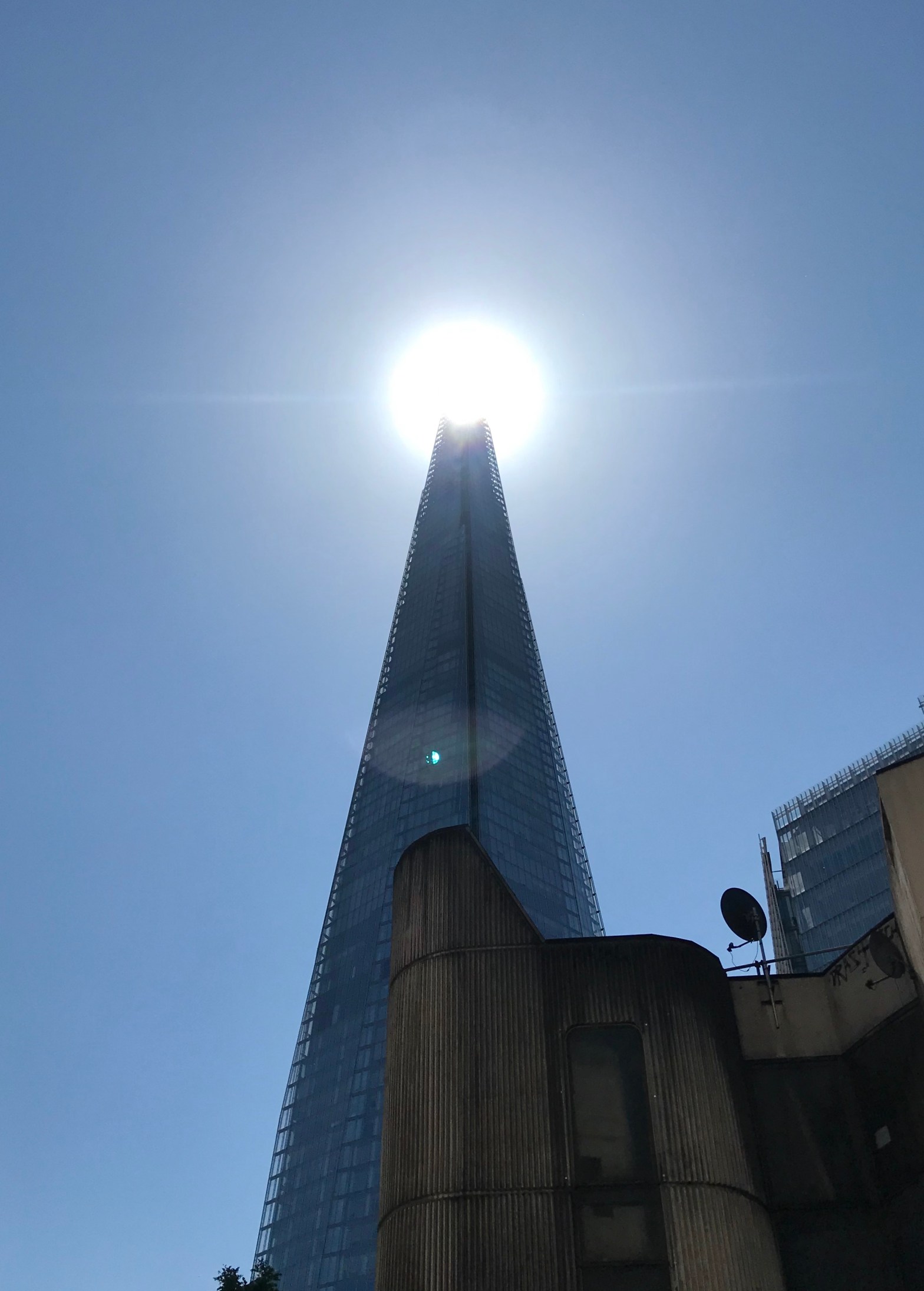
Four weeks later I made it back again. This was a bit more of a surreptitious mission, I was out with a friend and I hadn’t told him, and we walked to London Bridge intent on carrying on the previous night’s revelries. That was the easy part of course, we’d had years of practice at that. I was watching the clock as we walked, but as luck would have it the timing was impeccable, I didn’t have to break stride and we reached the dark shadow at 1pm on the nose. This time it was in a notably different spot, by a parked car outside St Olaf House. He looked nonplussed at my sudden photography and we moved on. It wasn’t even 13:01 before we were back on the move to The Rake.
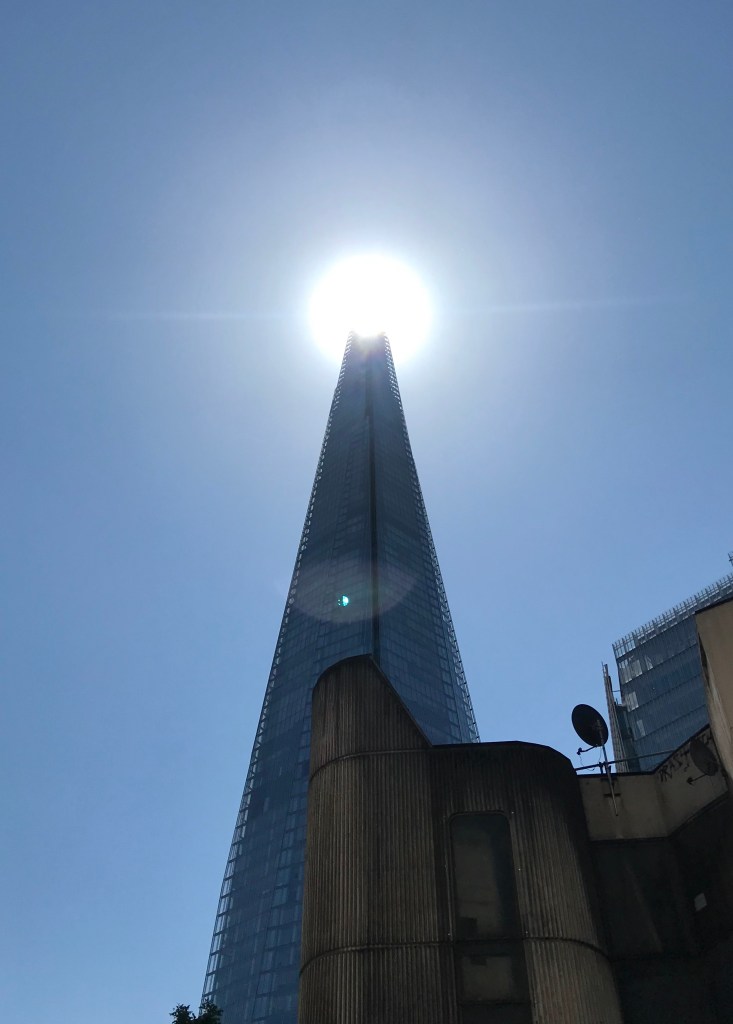
I’d never heard of St Olaf House before, nor indeed of St Olaf. Apparently in 1014 he sailed a fleet up the Thames and helped Aethelred the Unready fight off Canute in a battle at London Bridge, so the dedication seems fair enough.
The later details of why he was made a saint, how he has a church (or five) in central London named after him and why he remains venerated today in Norwegian folklore, well, that was a rabbit hole. Seems he wasn’t a Christian at all, instead a mere raider of less defended shores and a failed claimant to a vacant throne, and his lionisation in Norway was later co-opted by the Church as a way to retroactively claim a national hero to bring the people under the yoke of Christianity. That stuff really works huh.
Soon-to-be-Saint Olaf died in 1030 at the Battle of Stiklestad, although even this sounds more like an internecine murder dressed up as martyrdom after the event. Still, the popular mythology is that he Christianised Norway and he’s got a chunk of London named after him. Not bad for a pagan raider and a petty king.
 Shard Analemma